Back in 2012, we (the OG Jesus Club team) were clear about our goal: we wanted to make disciples of Jesus Christ among adults with intellectual disabilities (ID) in Singapore. But we weren’t clear about our approach: Should we seek to make our existing programmes in church more accessible for adults with ID? Or should we “pull out” adults with ID into a separate programme that caters specially to their learning pace and needs?
Initially, we tried out the integrated approach. We invited a church member with Down’s Syndrome to our regular Bible study group. But it quickly became apparent that in trying to pitch the Bible study to his learning pace and needs, we were losing the rest of the group and vice versa.
So we started our first Jesus Club (JC) in 2013. Today, we have 3 clubs with about 80 members with ID meeting fortnightly to learn more about Jesus. While the “pull-out” model has been effective in helping our members grow in Christ, our challenge now is how to integrate them into the church family. Or put differently, how do we prevent JC from becoming a silo community that is disconnected from the rest of the church?
We interviewed 2 members of Bethesda Frankel Estate Church (BFEC) to find out how they have gone about trying to integrate members of JC@BFEC into the church family – Jingfei, a volunteer at JC@BFEC, and Caleb, an elder at BFEC whose son attends JC@BFEC.
Interview with Jingfei and Caleb
- Johnson is a regular member of JC@BFEC. When and how did he start coming to JC?
Jingfei: In April 2024. He is the roommate of another member of JC@BFEC, A. They live in a residential home together. A had been asking Johnson to visit JC for some time, and Johnson finally agreed. After coming just once, Johnson was attracted to the community and to the lessons about Jesus, and he quickly became a regular.
- Share with us some things BFEC has done to integrate Johnson into the church family.
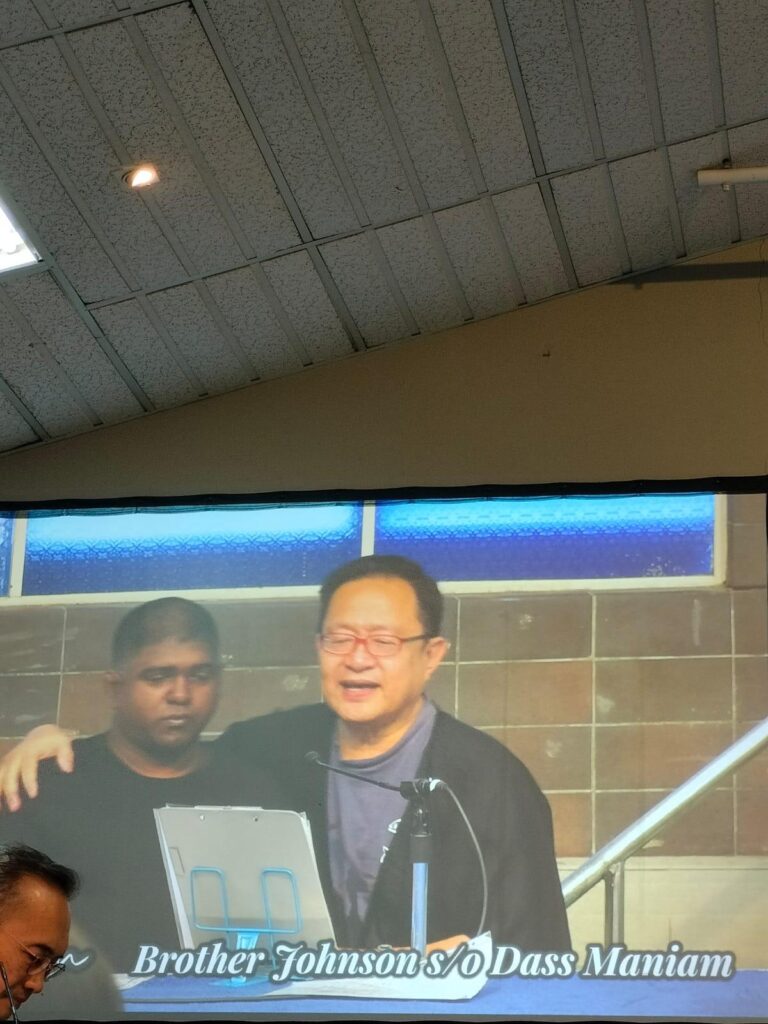
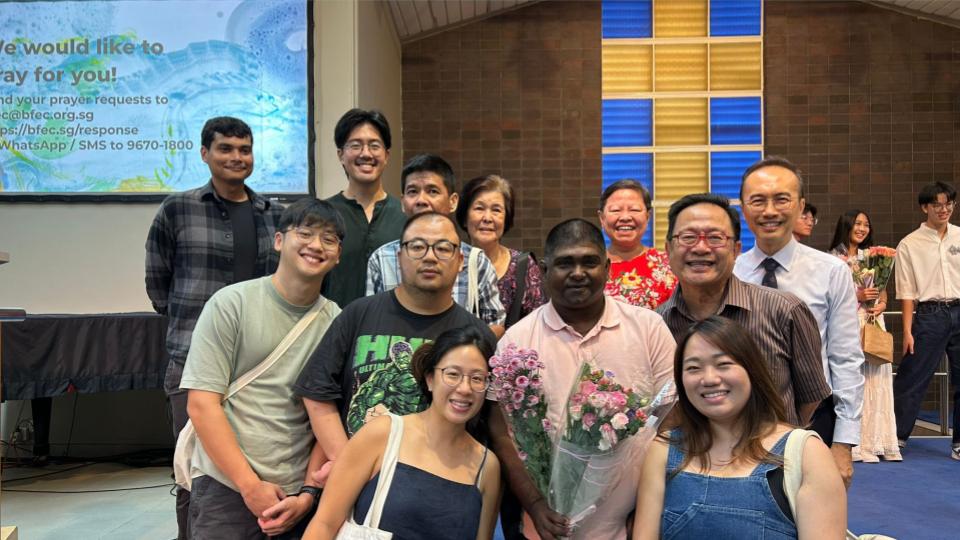
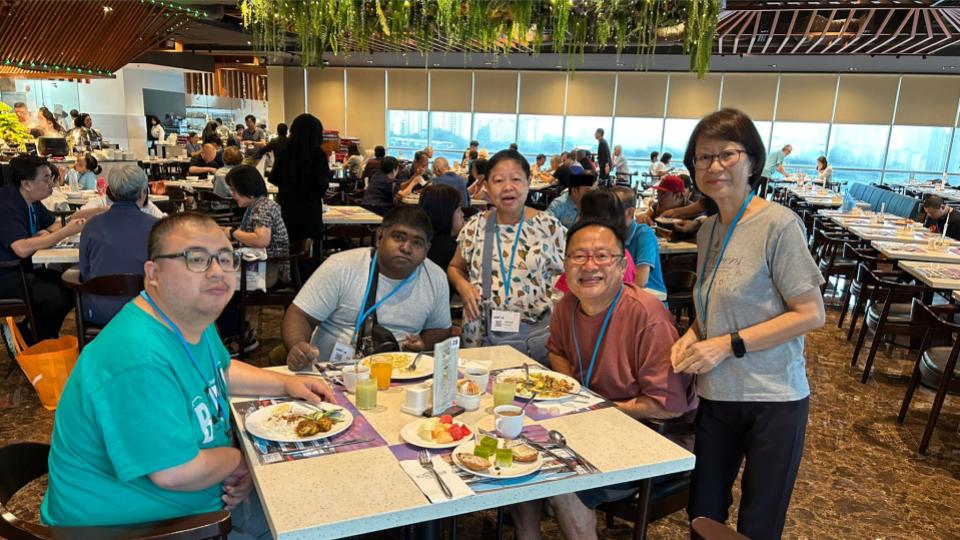
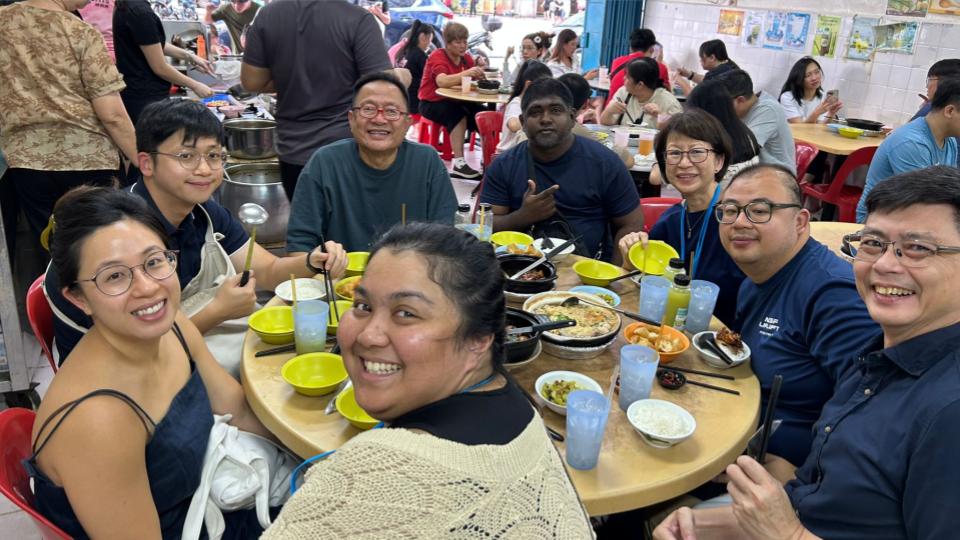
Jingfei: Caleb has been a big part of this. He is an elder with the church. He has taken Johnson under his wing. He often takes Johnson out for lunch after service. Johnson is a familiar face at church services and many greet him warmly during the meet-and-greet segment of service.
Johnson and A often sign up for church events such as the Alpha Course and other evangelistic events. While Johnson may not be able to participate meaningfully in the programmes, other church members recognise that he is there for the fellowship and community, and so they welcome him to join them for food and refreshments.
Caleb: Johnson has been coming to Frankel faithfully and we would bring him out for lunch each week until he started working [on Sundays] and has not been able to attend church as regularly. He expressed interest in going to church camp in 2025, so I made arrangements for him to do so and also roomed with him.
- How did Johnson decide to get baptised in BFEC? Also, did BFEC have to tailor the baptism course to cater to his learning needs? Or was the baptism course in a group setting with the other baptismal candidates?
Jingfei: After spending some time in Frankel, Caleb invited Johnson to consider being baptised. While Johnson may not have understood fully the implications of baptism, he saw what baptism looked like, as it was performed at service. He recognised that it was something that followers of Jesus went through, that it was a good thing, and so he desired it for himself as well.
Caleb: I personally taught Johnson and A baptism lessons separately and tried to communicate as simply as I could the basics of the Christian faith and the meaning of baptism and the Lord’s Supper. And I personally baptised both of them.
- How is Johnson involved in church life currently?
Jingfei: Johnson serves as an usher in Frankel on occasion. He takes his tasks seriously and shows up to church early when he is on duty. While Johnson is not in a cell group, he is an active and committed member of Jesus Club.
- Would you say Johnson is well-integrated into the church family?
Jingfei: I would say yes. However, this did not happen by itself. He comes regularly to service and introduces himself to people, so he became a familiar face over time. And because he serves as an usher, people also get to know him. He is closest with the Frankelites who serve at Jesus Club.
Caleb: I think it’s hard for Johnson and A to join any Bible study to discuss spiritual matters with other church members because they lack understanding. At best it’s only for fellowship. It’s different for my son, Christopher. Chris understands and is able to follow so he can join a regular cell group and is more integrated into the life of the church.
- At the same time, A also started attending BFEC regularly. What challenges have you faced in integrating A into the church family?
Jingfei: A enjoys novel experiences and meeting new people. While that is an understandable desire, that results in his tendency to visit new churches often and to sign up for their various events, without committing to a particular church.
It is difficult to communicate to A the importance of committing to a particular church body. His church-hopping tendencies affect his opportunities to form deeper relationships in his home church. For example, he was unable to go for his home church’s church camp, because he had signed for another church’s church camp.
Caleb: [Because I personally baptised A] I was disappointed with him when he got himself baptised again at another church and left Frankel to attend that church. A is always looking for new experiences and I am not sure if he really knows what it means to know Jesus. Although we tried to get new friends for him at Frankel, he was always looking for something else.
- Aspirationally, what would it look like for persons with ID to belong to the church family?
Jingfei: First, it would be helpful to have one or two “advocates” in the church. These would be church members who are not just welcoming to persons with ID, but who help to “teach” or demonstrate [to other church members] what interactions with persons with ID look like. Many in the church are not familiar with persons with ID. They may not be unfriendly, but they are just unfamiliar and don’t know how to interact with persons with ID. Having advocates in the church would help break down some of these barriers.
Second, it would be important to allow them to participate in the sacraments of baptism and communion. It is common for churches to only allow baptised members to participate in communion, so baptism has to come first. And for that to happen, it would not be appropriate for the church to simply sign up the person with ID for baptism classes. They would require personalised attention from someone who can explain the sacraments to them at an appropriate level.
Third, it would be important to find opportunities to allow persons with ID to serve. While they may require more guidance and training, this is important for the spiritual health of the individual with ID, and also that of the church. The church must be reminded that God’s kingdom and its servants look different from that of the world.